There’s something almost magical about a mechanical watch. Pop the case back and you’re looking at a tiny universe — hundreds of gears, springs, and jeweled bearings, all working together with a precision that puts most modern machines to shame. Watch brands love to show off this toughness with ads of divers plunging into the deep or climbers strapping their watch to a mountain face. But here’s the truth nobody puts in the marketing copy: these are delicate instruments, and most of the damage they suffer has nothing to do with drama. It comes from small, everyday habits that slowly wear things down.
You don’t need to drop your watch off a cliff to ruin it. A poorly timed date adjustment, a hot shower, or even resting your wrist near a laptop speaker can do the job just as effectively — and just as expensively. Below are the five mistakes that send the most watches into the repair shop, along with the easy fixes that keep your money (and your watch) exactly where it belongs.
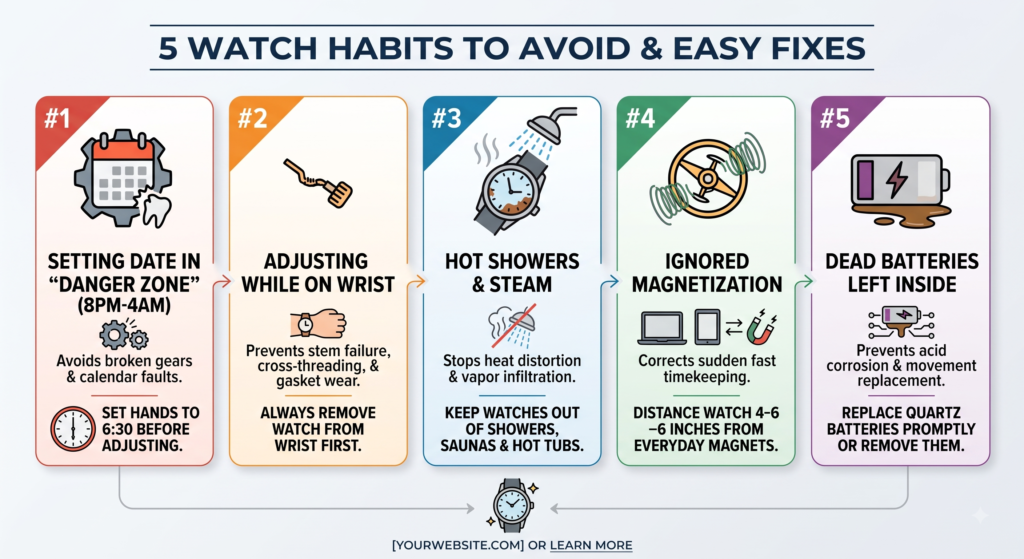
The quickset date feature feels like a small convenience — until it becomes a very expensive lesson in watch mechanics.
Here’s what’s actually happening inside the case: the date doesn’t just “switch over” at midnight like a digital clock. It’s a mechanical process. Somewhere between roughly 8 p.m. and 4 a.m. (the exact window depends on the movement), tiny gears inside the watch slowly engage with the date disc to prepare it for the flip to the next day. During this stretch, the changeover mechanism is physically locked into the date ring.
If you use the quickset function during this window, you’re essentially fighting the watch’s own gears. You end up forcing a disc that’s already being held in place by another part, and something has to give — usually a tooth on a gear, a fragile spring, or the disc itself.
Why it hurts your wallet: Fixing this isn’t a quick fix. A watchmaker has to open the case, pull the hands and dial, dig into the calendar module, and often source original replacement parts. That kind of repair can run anywhere from $300 to well over $1,200, depending on the brand.
The easy workaround: Before you touch the date, move the hands to 6:30 (morning or evening, doesn’t matter) — this is the one point on the dial where the date mechanism is guaranteed to be disengaged. From there, set the date to the day before, then push the hands forward past midnight so the date flips naturally to today. It takes an extra thirty seconds and it’s the difference between a healthy watch and a repair bill.
It seems harmless enough — a quick wind or a time tweak without bothering to take the watch off. But this habit is one of the sneakiest ways to damage the winding stem, the slim metal rod that connects the crown to everything happening inside the case.
When the watch is strapped to your wrist, there’s no way to pull or turn the crown in a perfectly straight line. Your fingers naturally tug at an angle, putting sideways pressure on a component that was never designed to handle it. Do this often enough and you’ll start to see real problems: the stem develops tiny fractures and eventually snaps, the crown tube and its seals wear unevenly and stop sealing properly, or — if you have a screw-down crown — you risk cross-threading it when you try to twist it back into place. Once those threads strip, that crown will never seal shut again.
The fix is almost too simple: take the watch off before you wind it or set the time. Hold it steady in one hand, and use your other hand to pull the crown straight out, along a flat horizontal line. If you have a screw-down crown, press it in gently while turning counterclockwise until you feel it click into the threads, then turn clockwise until snug — no need to crank it down hard.
Water is, without exaggeration, the fastest way to kill a mechanical movement. And ironically, it’s usually not the watches without any water resistance that suffer — it’s the “waterproof” dive watches whose owners misunderstood what that rating actually means.
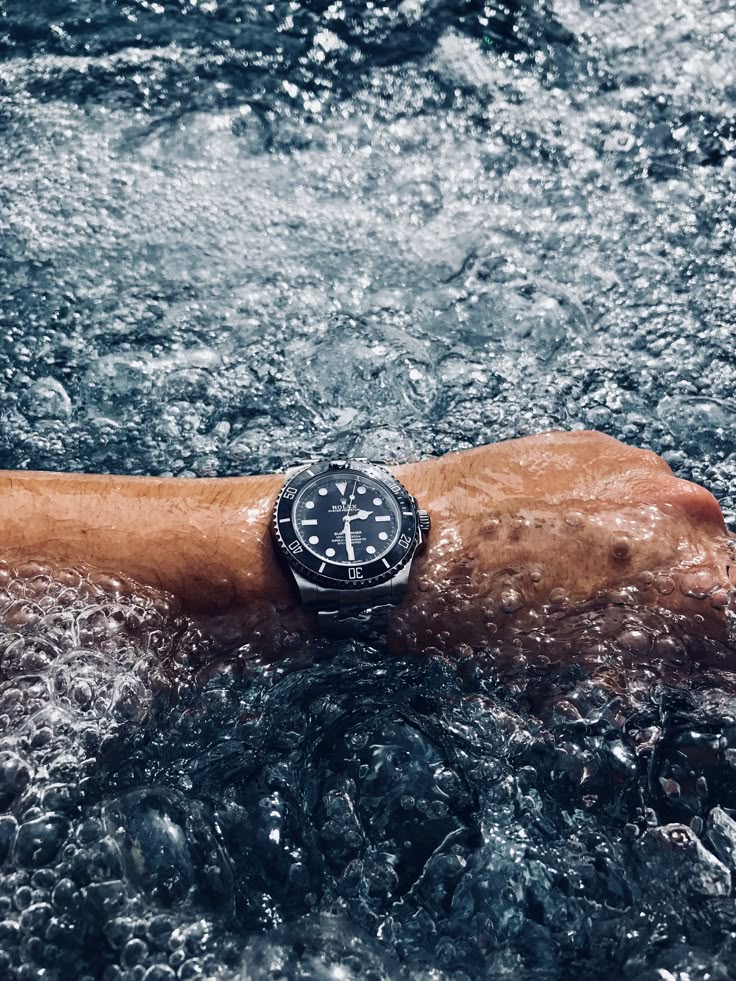
That number on the dial — 30m, 50m, 100m — isn’t a real-world depth guide. It’s a lab measurement, taken under still, controlled conditions with brand-new seals. The moment you introduce movement — swimming, splashing, jumping into a pool — you create pressure spikes that a static rating never accounted for. As a rough guide: 30m really only means splash-resistant (handwashing, rain), 50m is fine for light swimming, 100m can handle snorkeling and pool laps, and you’d want 200m or more before seriously considering diving.
Then there’s the mistake almost nobody thinks about: heat. Wearing a dive watch into a hot shower, sauna, or hot tub feels perfectly reasonable given the depth rating — but heat is actually the real threat. The watch case, the crystal, and the rubber gaskets all expand at different rates when exposed to sudden heat. That mismatch opens up microscopic gaps around the crown and bezel. Worse, steam behaves differently than liquid water — it can slip through gaps that would normally keep water out, then condense into moisture once things cool down. Once that moisture reaches the movement, rust can set in within 48 to 72 hours.
What it costs: Once moisture reaches the balance spring or escapement, parts start oxidizing almost immediately. A full overhaul with corroded parts replaced typically runs $800 to $2,500 or more.
How to stay safe: Skip the shower, sauna, and hot tub entirely when wearing a watch. Get your gaskets pressure-tested once a year if you regularly swim with your watch on, and if you ever notice fogging under the crystal, get it to a watchmaker right away — don’t wait around hoping it dries out on its own.
This one’s invisible, and that’s exactly why it catches people off guard. Mechanical watches rely on a hair-thin coiled spring — the hairspring — tucked inside the balance wheel. Expose it to a magnetic field, and its coils can stick together.
You’d be surprised how many magnets surround your daily life. Laptop palm rests sit right above internal speaker magnets. Tablet smart covers and folios use strong magnetic clasps. Purse closures and MagSafe phone mounts can generate fields over 1,000 Gauss. Even wireless charging pads throw off an active electromagnetic field while they’re powered on.
How to tell if it’s happened to you: If a watch that used to keep great time suddenly starts gaining anywhere from 20 seconds to several minutes a day, magnetization is the most likely culprit. A simple compass test can confirm it — wave the watch near the needle, and if it twitches or swings toward the case, something’s magnetized.
Good news: this is one of the cheapest fixes on the list. Keep your watch at least 4 to 6 inches away from laptops, phone speakers, and magnetic bag clasps. And if it does get magnetized, a watchmaker (or even a small home demagnetizer) can neutralize it in under ten seconds — no disassembly required.
“If it’s not broken, don’t fix it” is a fine philosophy for a lot of things. Watches are not one of them.
Mechanical movements rely on specialized micro-lubricants at every friction point — the jewel bearings, the pallet stones, the mainspring barrel. Over roughly four to seven years, those oils dry out or migrate away. Once that happens, metal is grinding directly against metal (and jewels), producing microscopic shavings that turn into an abrasive paste. What could have been a routine service turns into a full parts-replacement job.
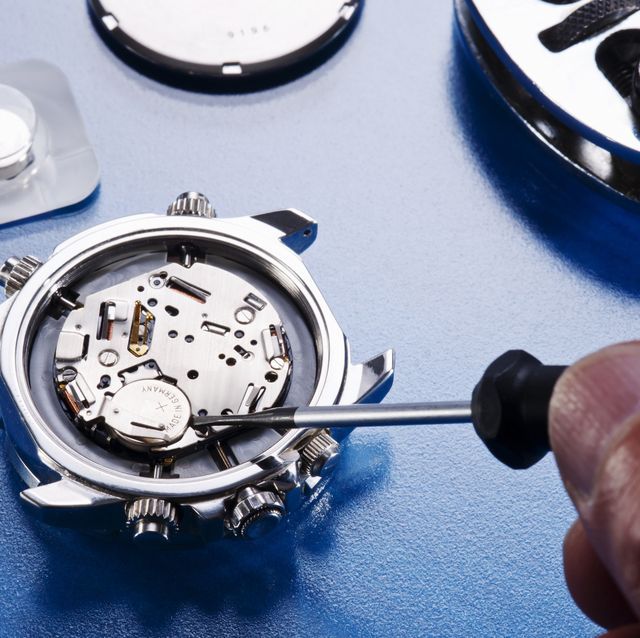
Quartz watches have their own version of this problem: a dead battery left sitting inside the case. As it depletes, it can leak corrosive electrolyte that eats through the circuit board and stepper motor. Once that corrosion sets in, you’re often looking at a full movement replacement rather than a simple battery swap.
A simple maintenance rhythm to follow:
If a mechanical watch is going into storage for a while, give it a manual wind once a month to keep the oils moving. And if a quartz watch won’t be worn for months, have the battery pulled beforehand.
None of these habits look dangerous in the moment. Setting a date, giving the crown a quick twist, hopping in a hot shower — they all feel completely normal. But watches are unforgiving of the wrong timing, the wrong angle, or the wrong environment. The good news is that avoiding all five of these mistakes takes almost no extra effort once it becomes habit. A few seconds of care is a lot cheaper than a few hundred (or thousand) dollars at the watchmaker.
Enjoyed this post? Check out more articles on the blog for similar insights!
Follow Veshwaqt on Instagram!