
Walk into a watch boutique, or spend ten minutes on an enthusiast forum, and you’ll start hearing words like escapement, lug-to-lug, tachymeter, sapphire sandwich, deployant clasp. It can feel like everyone else is fluent in a language you never learned. Spec sheets read less like product descriptions and more like engineering documents.
But here’s the thing: knowing what these terms actually mean is what separates a watch you’ll wear for the next twenty years from an expensive impulse buy that ends up in a drawer after a month. Once you understand what each part does, how materials differ, and why some features cost more than others, shopping gets a lot less intimidating.
1. The Case and Everything Around It
The case is the shell that protects the movement inside. It’s not just about keeping out dust and water, either — its shape has a lot to do with how the watch actually sits on your wrist.
Case: The main body of the watch. Most are made from 316L stainless steel, which resists corrosion and holds up well over time. If you’re looking at something pricier, you’ll run into titanium (lighter, hypoallergenic, a bit darker in color), bronze (which ages and picks up a patina the longer you wear it), ceramic (nearly impossible to scratch, though it can crack under a hard impact), or precious metals like gold and platinum.
Bezel: The ring on top of the case that holds the crystal in place. It can be fixed, rotating, plain, or fluted, and different styles serve different purposes:
- A diving bezel rotates only counterclockwise and has a 60-minute scale, so a diver can never accidentally add time to how long they think they’ve been underwater.
- A tachymeter bezel has a numeric scale used with a chronograph to calculate speed over a set distance.
- A GMT bezel is a 24-hour, bidirectional ring paired with a dedicated 24-hour hand, letting you track a second time zone.
Lugs: The little metal “horns” sticking out from the top and bottom of the case, where the strap attaches.
- Lug width is the gap between the lugs — usually 18mm, 20mm, or 22mm — and it determines what size strap you can use.
- Lug-to-lug distance is the full length from the top lug tip to the bottom lug tip, and honestly, it matters more for fit than the case diameter does. A 42mm watch with short, curved lugs can wear smaller on your wrist than a 39mm watch with long, straight ones.
Crown: The little knob on the side of the case (usually at 3 o’clock) that you use to set the time, adjust the date, or wind the watch by hand.
- A push-pull crown is what you’ll find on most dress and everyday watches — it’s sealed enough to handle a splash but not much more.
- A screw-down crown actually screws into the case, creating a tight seal, which is why it’s standard on dive and sport watches meant for real water exposure.
Pushers: The buttons near the crown (usually at 2 and 4 o’clock) that start, stop, and reset a chronograph.
Caseback: The underside of the watch. Some are solid, engraved metal — common on tool watches. Others have a clear window (called an exhibition or display caseback) so you can actually see the movement working inside.
2. The Crystal: What’s Protecting the Dial
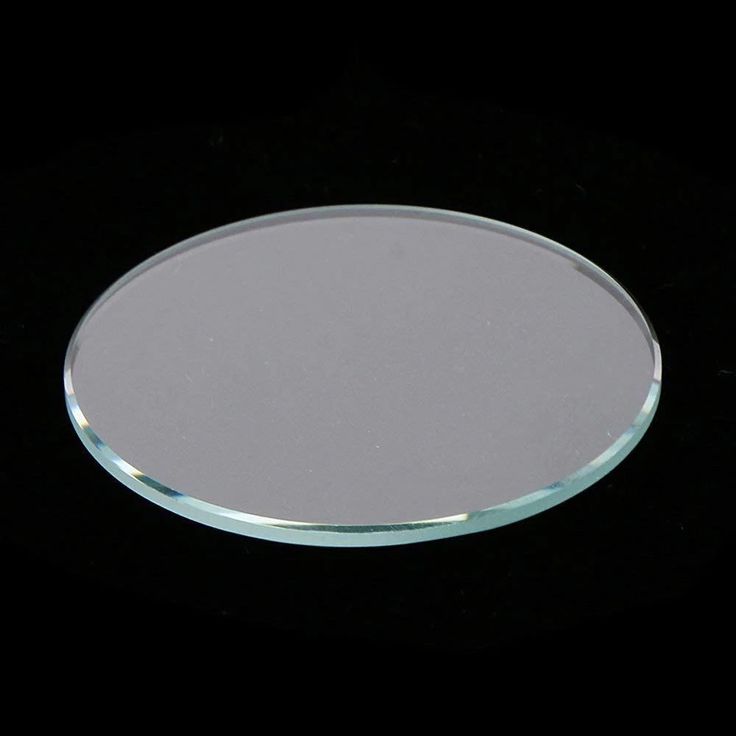
The crystal is the clear cover over the dial, and it’s usually made from one of three materials, each with its own tradeoffs.
| Crystal Type | Scratch Resistance | Impact Resistance | Where You’ll See It |
|---|---|---|---|
| Acrylic / Hesalite | Low — scratches easily | Very high — won’t shatter | Vintage reissues; scratches can be buffed out at home |
| Mineral Glass | Moderate | Moderate | Budget and entry-level watches |
| Sapphire Crystal | Exceptional (Mohs 9) | Moderate — can crack on a hard direct hit | Most modern luxury and quality tool watches |
Some crystals also have an anti-reflective coating, a thin chemical layer that cuts down glare so you can actually read the dial in bright sunlight.
3. The Dial, Hands, and Everything on the Face
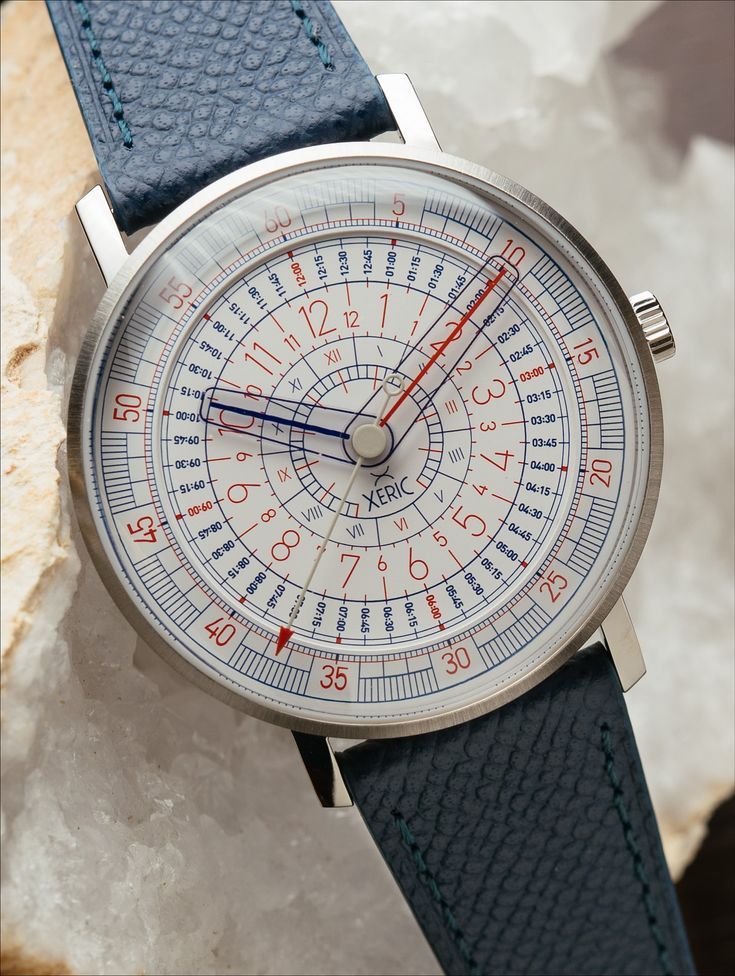
The dial is really the personality of the watch — it’s where you notice craftsmanship the most.
Dials come in a lot of finishes: sunburst (a radial brushed look), enamel (glass powder fused onto metal), guilloché (fine engraved geometric patterns), matte, or skeleton, where cutaways let you see the gears underneath.
Hour markers can be printed directly onto the dial, or “applied” — separate metal pieces that are polished and mounted by hand for a bit of physical depth and a nicer reflection.
Hands come in a handful of classic shapes: Breguet (hollow tips shaped like a crescent moon), Dauphine (tapered triangles), Mercedes (a circular hour hand with a three-pointed star, made famous by Rolex), and baton (simple straight bars).
The chapter ring, or rehaut, is the inner ring between the dial’s edge and the crystal — sometimes marked with minute ticks or a tachymeter scale.
Lume is the glow-in-the-dark coating on the hands and markers. Most modern watches use Super-LumiNova or LumiBrite, non-radioactive compounds that soak up light and glow for hours afterward. Older or specialty watches sometimes use tritium gas tubes instead — tiny glass tubes filled with mildly radioactive gas that glow on their own, no charging needed, for 15 to 25 years.
4. The Movement: What’s Actually Driving the Watch
The movement, or caliber, is the mechanism that keeps time. Broadly, there are two families: quartz and mechanical.
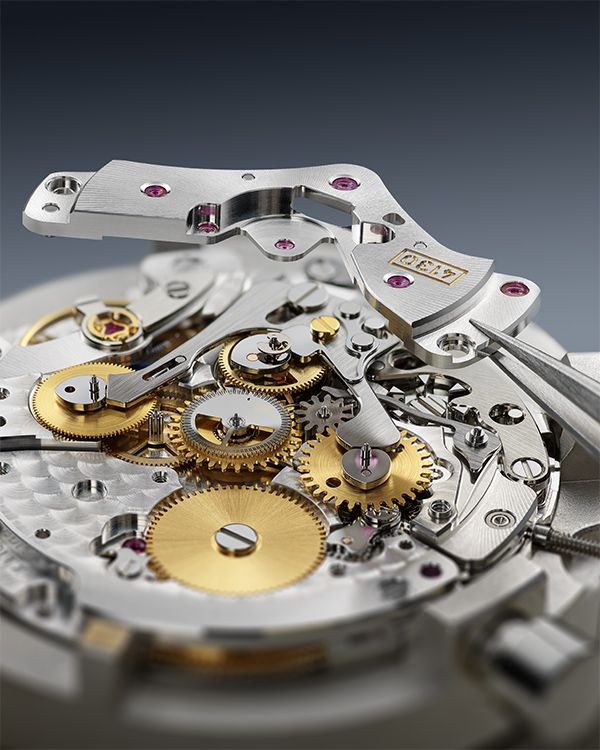
Quartz movements run on a battery that sends current through a tiny quartz crystal, which vibrates 32,768 times a second — a microchip converts that into steady one-second pulses. They’re remarkably accurate (usually within 15 seconds a month), low-maintenance, tough, and easy to spot by the way the second hand ticks in distinct steps rather than sweeping. Some, like Citizen’s Eco-Drive or Seiko’s Solar line, charge themselves off ambient light instead of needing a battery swap.
Mechanical movements don’t use any electronics at all — just springs, gears, and wheels working together. That’s what gives you the smooth, sweeping second hand instead of a tick.
- Manual wind watches need to be wound by hand through the crown, which coils a spring (the mainspring) inside a small barrel.
- Automatic (or self-winding) watches have a weighted, semi-circular rotor that spins as your wrist moves throughout the day, winding the mainspring for you.
A few specs worth knowing when comparing mechanical movements:
- Power reserve — how long the watch keeps running once fully wound, typically 38 to 80 hours these days.
- Jewels — synthetic rubies placed at friction points in the gear train to reduce wear. Most standard three-hand movements have somewhere between 17 and 25.
- Frequency (VPH) — how fast the balance wheel oscillates. 28,800 VPH (4 Hz) is the modern standard; high-beat movements run at 36,000 VPH or more for a smoother sweep.
- Escapement — the part that controls how energy releases from the mainspring, and the reason mechanical watches make that familiar tick-tock sound.
- COSC certification — an official Swiss designation meaning the movement was tested over 15 days, 5 positions, and 3 temperatures, and came out accurate to within -4 to +6 seconds a day.
5. Complications: Anything Beyond Just Telling Time
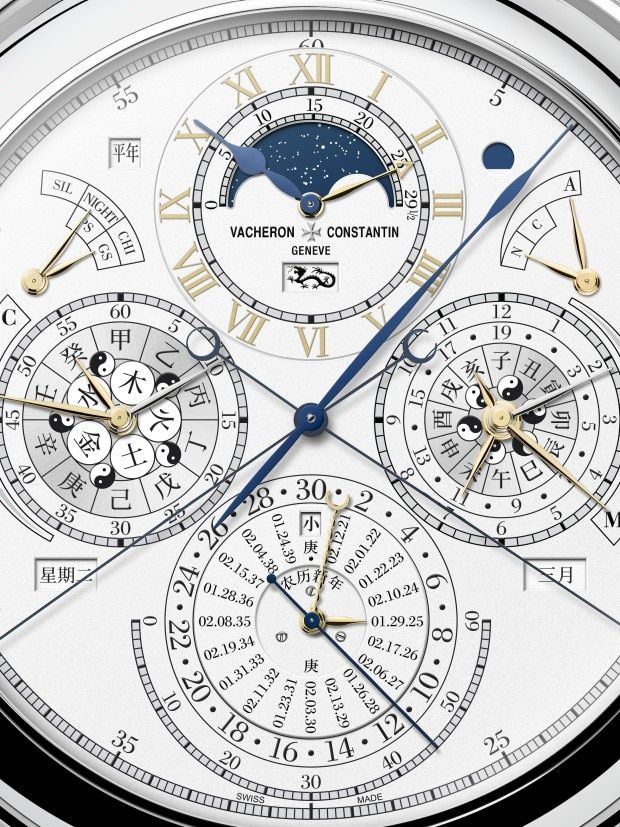
In watch terms, a “complication” is any function beyond hours, minutes, and seconds.
- Date / Day-Date: the most common complication — a small window showing the date, sometimes the day of the week too.
- Cyclops: a small magnifying lens (usually 2.5x) placed over the date window to make it easier to read.
- Chronograph: a built-in stopwatch, run by the pushers, with its own sub-dials for timing.
- GMT / Dual Time: a second hand that circles the dial once every 24 hours, tracking a different time zone — handy if you travel a lot.
- Moonphase: a small disc showing the current phase of the moon through a curved window — more decorative than functional, but people love it.
- Perpetual calendar: tracks the day, date, month, and even leap years automatically, without needing correction until the year 2100.
- Tourbillon: a rotating cage around the escapement, designed to cancel out gravity’s effect on accuracy. It’s complex, expensive, and mostly a showcase of watchmaking skill at this point.
6. Straps, Bracelets, and Clasps
How a watch attaches to your wrist changes everything about how it wears — comfort, weight, and how dressy or casual it feels.
Bracelets are made of metal links, and the style matters:
- Oyster: three flat, wide links — sturdy and sporty.
- Jubilee: five smaller, polished links — more flexible and dressier.
- Milanese / mesh: fine woven wire, giving a vintage look with essentially infinite adjustability.
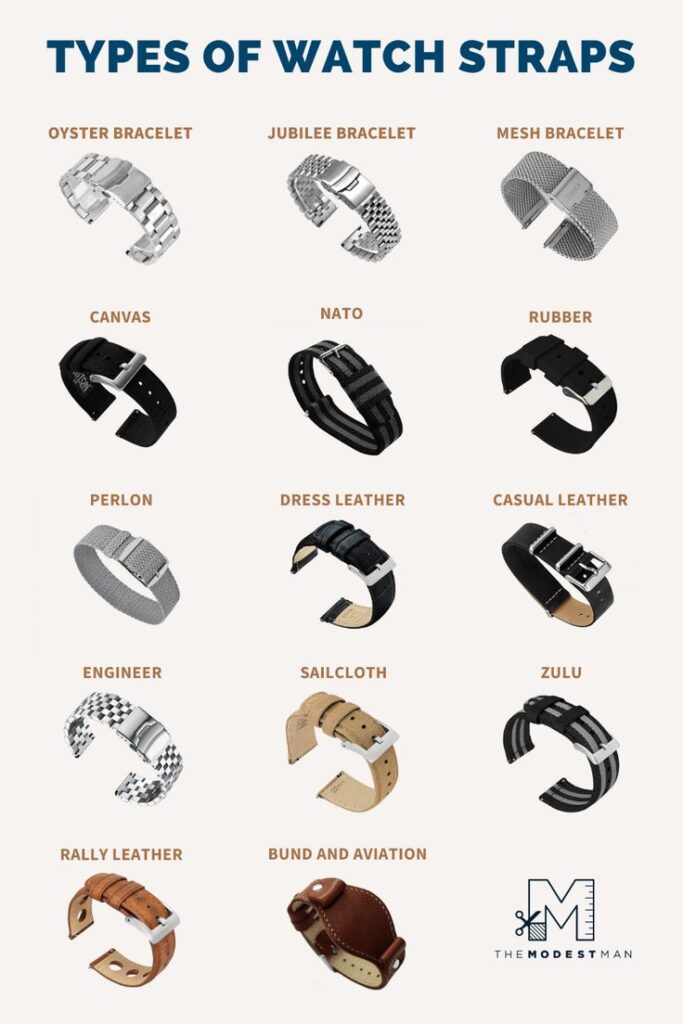
Straps are anything non-metal — leather, silicone, rubber, or woven nylon. NATO straps fall into this last category; they were originally made for British military use and loop through the case for extra security if a spring bar fails.
As for how they fasten:
- A pin buckle (or tang buckle) is the classic belt-style loop, most common on leather and rubber straps.
- A deployant clasp folds in on itself rather than using a pin. It’s gentler on leather over time and much less likely to let the watch slip off if it comes loose.
- Micro-adjust features — small ratchets or extra pinholes built into a metal clasp — let you fine-tune the fit by a few millimeters, which matters more than you’d think once your wrist swells in the heat.
7. A Quick Cheat Sheet Before You Buy
Check what the water resistance rating actually means:
- 30m / 3 ATM — fine for rain or washing your hands, not for swimming.
- 50m / 5 ATM — okay for showering or light swimming.
- 100m / 10 ATM — good for swimming and snorkeling.
- 200m+ / 20 ATM — built for scuba diving, usually with a screw-down crown.
Care more about lug-to-lug than case diameter. If your wrist is under 6.5 inches (16.5cm), aim for a lug-to-lug distance under 47mm so the case doesn’t overhang the edge of your wrist.
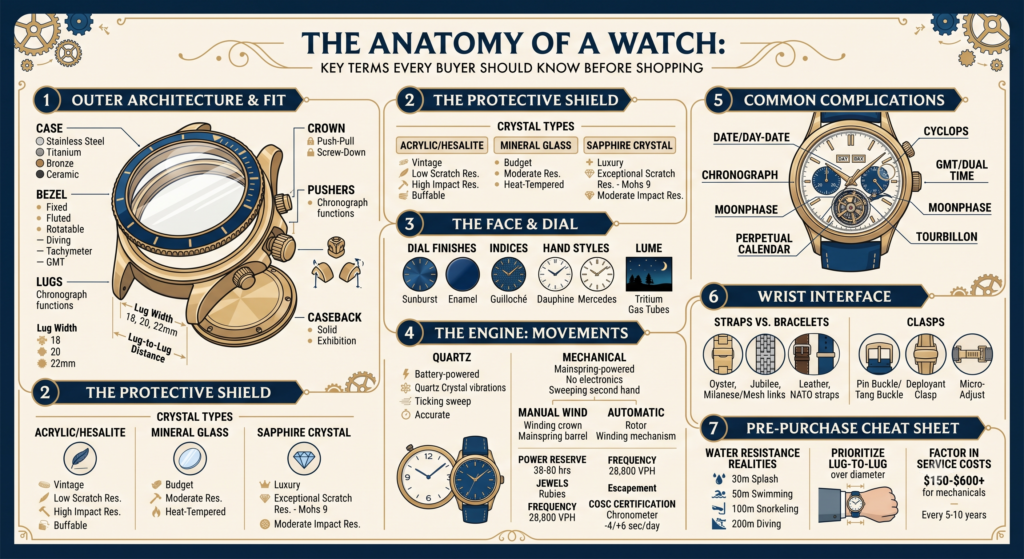
Budget for servicing down the road. Mechanical watches need cleaning, lubrication, and regulation every 5 to 10 years. Expect around $150 for common workhorse movements like an ETA 2824 or Sellita SW200, and $600 or more for complex in-house calibers.
Once you’ve got this vocabulary down, brand marketing stops mattering as much — you can actually judge build quality for yourself and pick something that fits your life and your wrist, not just the ad.
Enjoyed this post? Check out more articles on the blog for similar insights!
Follow Veshwaqt on Instagram!