
Automatic, Quartz, or Solar? A Beginner’s Guide to Watch Movements
When you start shopping for a watch, you’re usually chasing a look first — a clean minimalist dial, a chunky dive bezel, or a strap in soft brown leather. But underneath all that glass and metal sits the part that actually matters most: the calibre.
The movement is the engine driving the hands, keeping time accurate, and running any extra functions like a date window or chronograph. Once you understand what powers a watch, everything else starts to make sense — how it fits into daily wear, how much upkeep it needs, and how long it’ll realistically last.
There are two major engineering families in watchmaking:
- Mechanical run entirely on physical springs and gears, with no electricity involved.
- Quartz run on battery or stored electrical power.
From these two families come three movement types that dominate the market today: everyday Quartz, self-winding Automatic, and light-powered Solar Quartz.
1. What Exactly Is a Watch Movement?
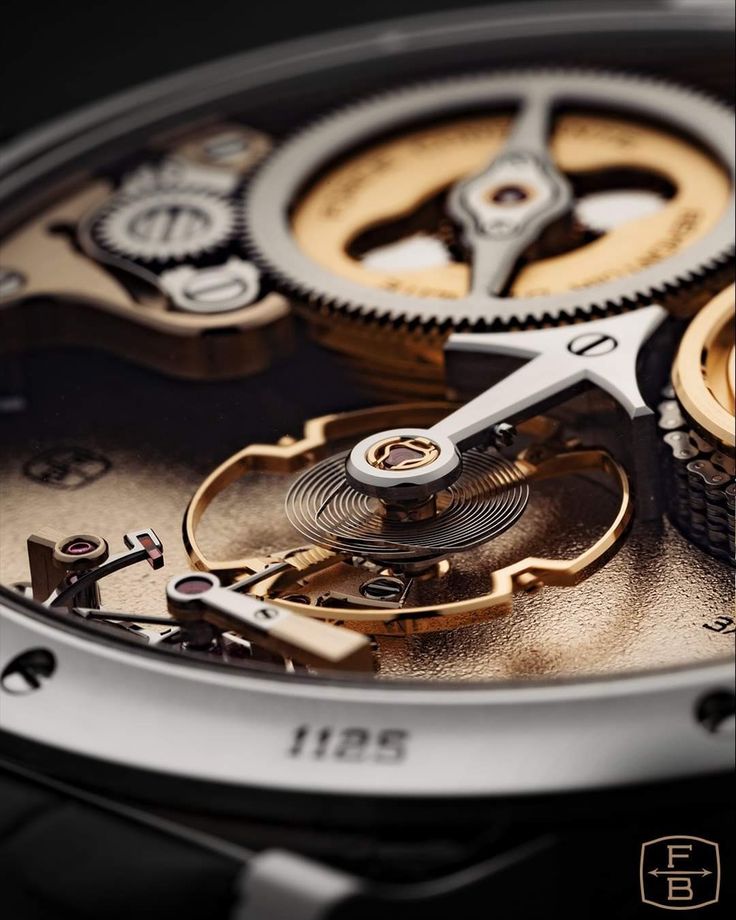
Think of the movement as the engine under the hood. Strip it out, and a watch is just an empty metal case. Movements split into two core engineering paths:
Mechanical Movements
Mechanical movements run on stored physical energy. A wound spring slowly releases that energy through a chain of tiny gears, kept in check by an oscillating balance wheel. There’s no battery, no microchip, no circuit board — just pure mechanics.
Quartz Movements
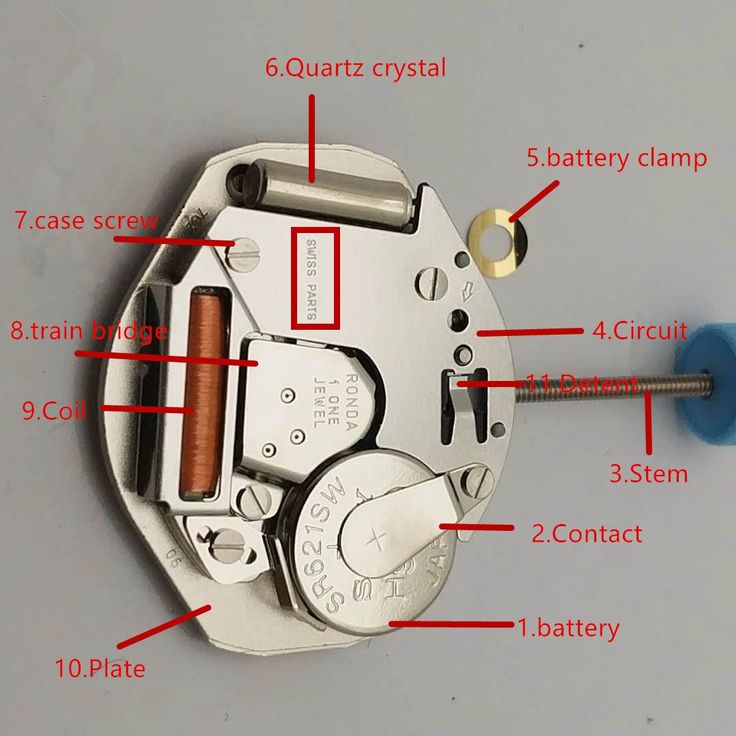
Quartz movements run on electricity. A battery or capacitor sends current through a synthetic quartz crystal, causing it to vibrate at a precise frequency. Integrated circuitry then turns those vibrations into steady pulses that drive the gear train and move the hands.
2. Quartz Movements: The Practical Benchmark
Back in 1969, Seiko introduced the Astron, the first commercially available quartz wristwatch. It kicked off what the industry now calls the “Quartz Crisis,” reshaping watchmaking almost overnight by making precise timekeeping cheap and widely available.
How Quartz Actually Works
Quartz technology relies on piezoelectricity. A silver-oxide battery feeds current into a tuning-fork-shaped quartz crystal, and that crystal vibrates at a remarkably consistent rate of 32,768 times per second.
An internal microchip keeps count of these vibrations. Every time it tallies 32,768 oscillations, it sends a signal to a miniature stepping motor. That motor nudges the gear train forward, which is what makes the seconds hand jump exactly once per second.
[ Battery / Power Source ]
           │
           ▼
[ Synthetic Quartz Crystal ] ──( Vibrates at 32,768 Hz )
           │
           ▼
[ Microchip / Circuitry ]    ──( Counts 32,768 Pulses = 1 Second )
           │
           ▼
[ Stepping Motor ] ─────────( Rotates Gears & Hands )
How to Spot One
Look at the seconds hand. Standard quartz watches have a signature deadbeat tick — one sharp, mechanical jump per second, rather than a smooth glide.
Pros of Quartz Movements
- Exceptional Accuracy: A typical quartz movement drifts by only about $\pm 15$ seconds a month, easily outperforming basic mechanical watches.
- Low Maintenance: Set it once and wear it. No winding, no daily fuss.
- Cost-Effective: Quartz crystals and integrated circuits scale efficiently in manufacturing, so high precision doesn’t have to come with a high price tag.
- Durability: With far fewer delicate moving parts, quartz watches shrug off drops, vibrations, and rough daily conditions better than mechanical pieces do.
Cons of Quartz Movements
- You’ll Need to Swap Batteries: Silver-oxide batteries typically last 2–3 years before they need replacing (and properly disposing of).
- Not Much Mechanical Artistry: Enthusiasts tend to see circuit-board movements as mass-produced electronics rather than traditional hand-crafted horology.
3. Automatic Movements: The Horological Soul
If quartz represents modern efficiency, automatic movements represent old-school mechanical engineering. An automatic watch is a self-winding mechanical piece that turns the natural motion of your wrist into usable kinetic energy.
How Automatic Movements Work
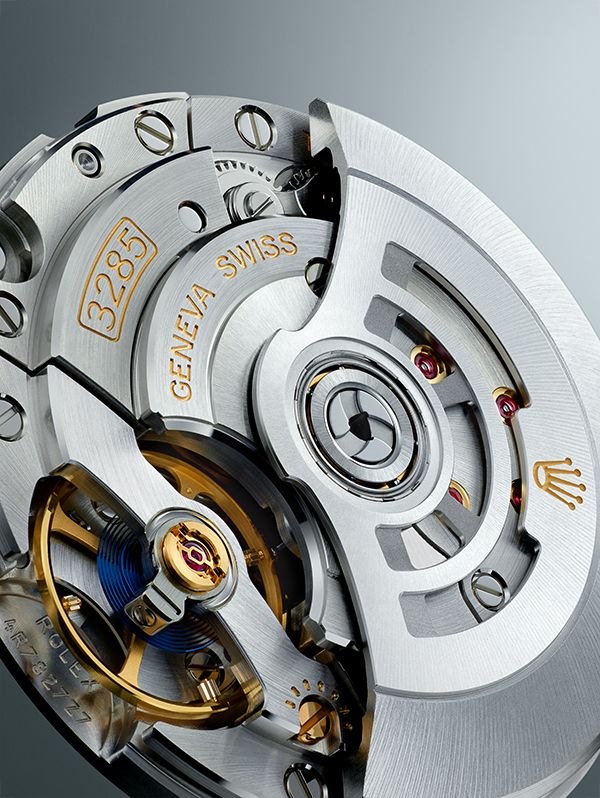
Inside the watch, a tightly coiled strip of metal called the mainspring stores mechanical energy. As the spring slowly unwinds, that energy travels through a gear train to the escapement, which releases it in small, controlled bursts to the balance wheel — the part that oscillates back and forth like a tiny pendulum to regulate the timing.
What earns the movement its “automatic” label is a weighted half-moon of metal called the rotor. Mounted on a central pivot, the rotor swings freely as your arm moves, and that motion automatically winds the mainspring throughout the day.
Take the watch off and set it aside, though, and it’ll run on its stored energy reserve alone — usually somewhere between 38 and 80 hours, depending on the caliber — before it stops.
How to Spot One
Because the balance wheel in an automatic movement oscillates several times per second (typically 21,600 to 28,800 beats per hour), the seconds hand doesn’t jump. Instead, it glides in 6 to 8 tiny steps per second, producing that classic smooth sweeping second hand.
Pros of Automatic Movements
- Traditional Craftsmanship: Automatic watches can contain dozens or even hundreds of hand-assembled gears, jewels, springs, and levers, often visible through an exhibition case back.
- Battery-Free: Runs purely on mechanical energy generated by your own motion.
- Long Lifespan: A well-made mechanical movement can be serviced, repaired, and handed down across generations.
Cons of Automatic Movements
- Lower Precision: Even nice automatics typically drift $\pm 5$ to $\pm 15$ seconds a day, thanks to gravity, temperature, and how you wear it.
- Higher Total Cost: Precision manufacturing pushes up the purchase price, and routine servicing is recommended every 5–7 years.
- Needs to Be Worn: Leave it off past its power reserve and it’ll stop, meaning you’ll have to manually wind it and reset the time.
4. Solar Movements: The Sustainable Hybrid
Solar movements combine quartz-level accuracy with light-harvesting technology, doing away with disposable batteries altogether. Pioneered by names like Citizen Eco-Drive, Seiko Solar, and Casio Tough Solar, solar quartz is essentially the next evolutionary step for quartz timekeeping.
How Solar Movements Work
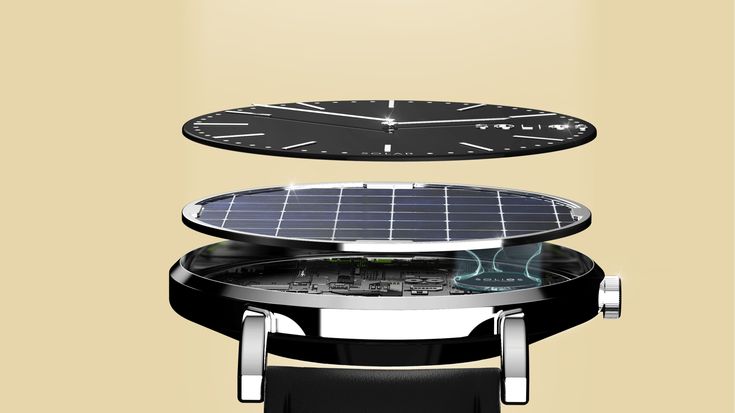
A solar watch has a translucent dial sitting over a photovoltaic solar panel. That panel soaks up ambient light — anything from direct sunlight to indoor fluorescent lighting — and converts it into electrical current.
Rather than powering a disposable battery, that current charges a long-life rechargeable cell (usually a titanium-lithium-ion capacitor). This cell runs a standard high-accuracy quartz circuit while storing any surplus energy for later.
[ Light Source (Sunlight / Ambient) ]
                 │
                 ▼
[ Photovoltaic Panel Under Dial ]
                 │
                 ▼
[ Rechargeable Capacitor / Cell ]
                 │
                 ▼
[ Quartz Movement & Stepping Motor ]
Power Reserve and Longevity
Solar tech is genuinely efficient. A fully drained watch can recharge after just a few hours in direct sunlight. Once topped off, most solar watches will run in total darkness for 6 to 12 months (some power-saving models stretch that out to 5 years). The rechargeable cell itself holds up well too, typically retaining over 80% of its charging capacity after 15 to 20 years of use.
Pros of Solar Movements
- High Precision: Delivers the same reliable $\pm 15$ seconds a month accuracy you’d expect from standard quartz.
- No Regular Battery Swaps: Skips the usual 2-year battery changes entirely, which is easier on both your wallet and the environment.
- Grab-and-Go Convenience: Reliable for daily wear, travel, and outdoor use without ever needing manual winding or frequent battery changes.
Cons of Solar Movements
- Light Dependent: Leave it in a dark drawer too long and the power cell can drain completely, requiring extended light exposure to recover.
- Higher Initial Cost Than Basic Quartz: The solar panel and specialized capacitor add to manufacturing costs compared to a standard battery-powered quartz model.
5. Movement Comparison at a Glance
| Feature | Standard Quartz | Automatic Mechanical | Solar Quartz |
|---|---|---|---|
| Power Source | Disposable Silver-Oxide Battery | Wrist Motion (Mainspring) | Light (Sunlight & Indoor Light) |
| Seconds Hand Motion | Ticking (1 step/sec) | Sweeping (6–8 steps/sec) | Ticking (1 step/sec) |
| Average Accuracy | $\pm 15$ seconds / month | $\pm 5$ to $\pm 20$ seconds / day | $\pm 15$ seconds / month |
| Power Reserve / Life | 2–3 years per battery | 38–80 hours (unworn) | 6–12 months in total darkness |
| Maintenance Need | Battery swap every 2–3 yrs | Mechanical service every 5–7 yrs | Storage cell swap every 15–20 yrs |
| Overall Cost | Budget-Friendly | Mid to Luxury Investment | Accessible Mid-Range |
6. How to Choose the Right Movement for You
Matching a movement to your lifestyle really comes down to what you value most in a watch:
- Go Quartz if: You want precision, an affordable price, and grab-and-go convenience — no worrying about power reserves or setting the time.
- Go Automatic if: You love horological history, visible gearwork, and that classic sweeping second hand — a watch with a bit of mechanical soul.
- Go Solar if: You want quartz-level precision with zero daily hassle, plus years of eco-friendly ownership without constant battery changes.
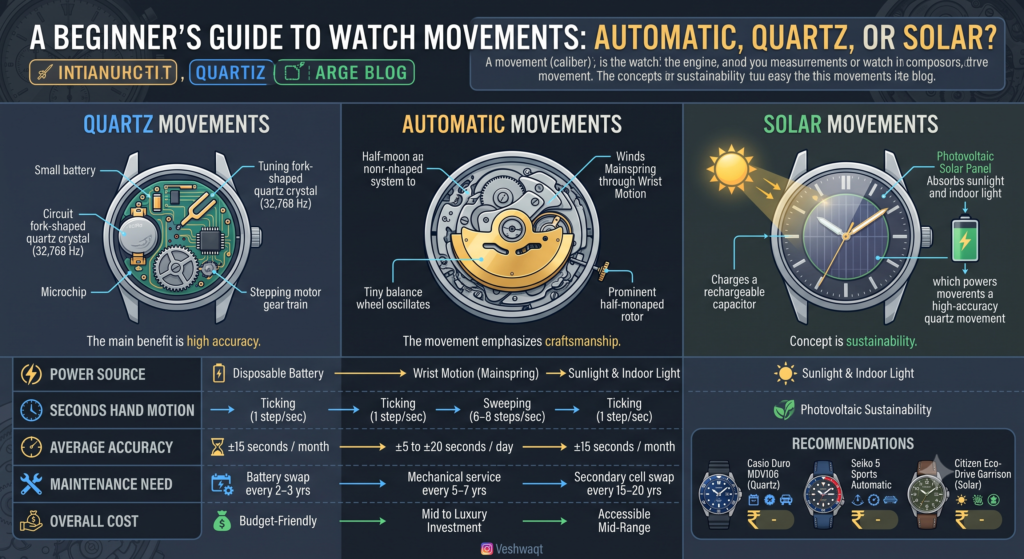
Entry-Level Recommendations
If you’re ready to pick your first watch, here are three solid entry points — one for each movement type — that show off what each category does best.
1. Quartz Option: Casio Duro MDV106 Series
The Casio Duro MDV106 packs high-tier dive watch specs into a genuinely affordable package. With a solid stainless steel case, a resin strap, a screw-down crown, and 200 meters of water resistance, it’s a tough, accurate everyday diver you can just grab and wear.
- Movement: Precision Quartz
- Key Features: 200M Water Resistance, Stainless Steel Case, Date Display, Screw-Down Crown
- Price: ₹5,191.00 (Rating: 4.8★ over 1,600+ reviews)
2. Automatic Option: Seiko 5 Sports Automatic
The Seiko 5 Sports line is a practical way into self-winding mechanical watches. It runs on Seiko’s dependable in-house automatic caliber, shows off an exhibition case back, and keeps things sporty and casual — traditional mechanical craftsmanship without the luxury price tag.
- Movement: In-House Self-Winding Automatic
- Key Features: Sweeping Seconds Hand, Display Case Back, Day-Date Complication, Stainless Steel Construction
- Price: ₹40,000.00 (Rating: 4.8★ over 510+ reviews)
3. Solar Option: Citizen Eco-Drive Garrison BM8180
The Citizen Eco-Drive Garrison BM8180 pairs field-watch styling with light-harvesting tech. Powered by Citizen’s Eco-Drive movement, it turns ambient indoor or outdoor light into power, giving you quartz-level precision without ever needing a battery change.
- Movement: Citizen Eco-Drive Solar Quartz
- Key Features: Solar Photovoltaic Dial, Military Field Design, Day-Date Window, Water Resistance
- Price: ₹15,208.00 (Rating: 4.7★ over 1,200+ reviews)
Enjoyed this post? Check out more articles on the blog for similar insights!
Follow Veshwaqt on Instagram!