
Let’s be honest: finding a T-shirt that actually fits well is way harder than it should be. Most sizing charts just throw a size label at you (S, M, L, XL) and call it a day, completely ignoring how fabric actually moves and drapes on your specific body. That’s why so many “medium” shirts feel completely different depending on the brand.
The truth is, great fit isn’t about the size on the tag. It’s about visual balance and paying attention to a few key zones on your body. Whether you’re after a sharp, classic look, something more relaxed, or a trendy boxy cut, it all comes down to understanding fit from the shoulders down.
Start at the Shoulders. Always.
Here’s the golden rule: if a T-shirt doesn’t fit right at the shoulders, nothing else matters. You can’t fix it by tucking, pulling, or hoping for the best.
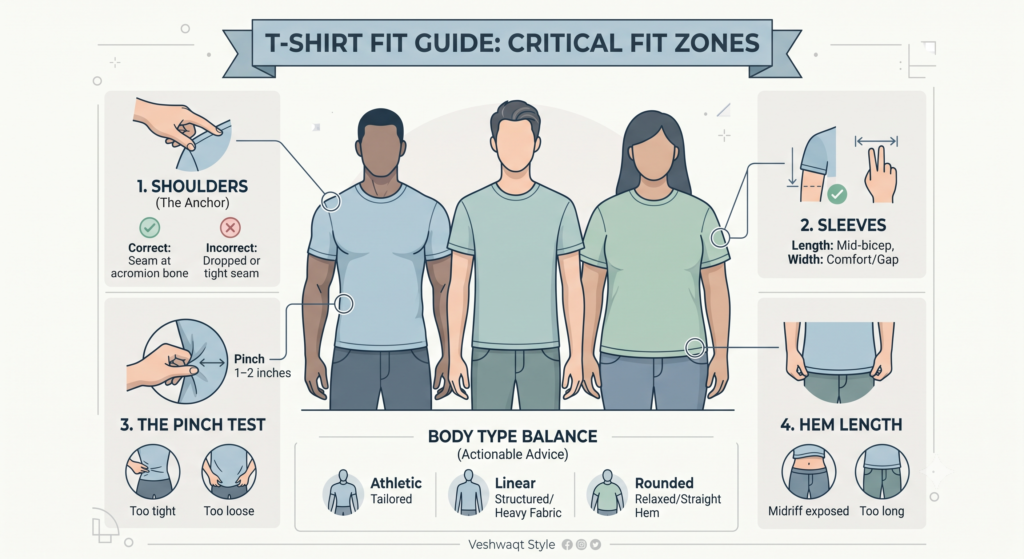
Think of the shoulder seam as the anchor for the entire shirt. On a classic, well-tailored fit, that seam should land right where your shoulder bends into your upper arm.
If it’s too tight, the seam creeps up toward your neck, and you’ll start seeing those annoying diagonal pull lines across your chest. Your arms won’t move freely either.
If it’s too loose, the seam slides down past your shoulder and onto your bicep. Unless you’re intentionally going for an oversized, dropped-shoulder look, this just makes your whole frame look smaller and sloppier than it is.
The Fit Zones Worth Checking
Once your shoulders are sorted, there are a few other spots worth a quick check.
Sleeves. Aim for the hem to hit around your mid-bicep. Go too long and it drags down toward your elbow, which visually shortens your arms. Too short, and it just looks off. As for width, you should be able to slip two fingers between your arm and the sleeve opening. If it’s squeezing your arm or flapping around like a bell sleeve, something’s wrong with the cut.
Chest and waist. Here’s a simple trick: grab the fabric at your side, around your waist or lower ribs. A good fit lets you pinch about an inch or two of extra material. Any less, and the shirt is going to cling and restrict how you move. Any more than three inches, and you’ll get bunching and folds you really don’t want.
Length. The hem should fall just past your belt line, roughly around the middle of your zipper. Do a quick test: raise your arms overhead. If your stomach pops out, it’s too short. If the hem reaches all the way down over your back pockets, it’s too long and will make your legs look shorter.
Matching the Cut to Your Body
Fit isn’t about disguising your body. It’s about working with your natural shape to create a look that feels intentional and put-together. Different cuts do different things depending on your frame.
If you’ve got broad shoulders and a narrower waist, go for a tailored or athletic fit. Look for higher armholes and a straighter drape so the fabric doesn’t bunch up around your midsection.
If your build is more straight up and down, a structured crew neck in a heavier cotton will add some visual definition around your chest and shoulders.
If you’ve got a rounder or softer frame, a relaxed fit with a straight hem usually works best. Skip the stretchy, clingy blends and go for something like cotton-linen or a heavier ring-spun cotton that hangs cleanly.
If you’re shorter through the torso, try a slightly cropped or higher-hemmed cut. Hems that sit right at your belt or hip pockets can make your legs look longer.
Fabric Matters More Than You Think
Thin, flimsy fabric clings to every curve and just collapses on your body. It doesn’t do you any favors. A heavier cotton tee, on the other hand, holds its own shape and gives you a cleaner silhouette no matter your build.
On the flip side, if you’ve got a broader chest or shoulders and want to soften that look a bit, try a raglan sleeve or drop-shoulder crew neck. These styles spread the fabric out more evenly instead of creating sharp lines right at the seam.
The Quick Fitting Room Check
Next time you’re trying on a T-shirt, run through this fast checklist before you commit:
- Do the shoulder seams sit right at your shoulder point?
- Do the sleeves end around mid-bicep with a little breathing room?
- Can you pinch about an inch or two of fabric at your waist?
- Does the hem land somewhere between your belt and your zipper?
- Does the collar lie flat against your collarbone without gapping or bowing out?
Get these five things right, and you’ve basically nailed it. A T-shirt that fits well isn’t just more comfortable; it makes your whole outfit look more intentional and put-together, no matter how casual the rest of your look is.
Enjoyed this post? Check out more articles on the blog for similar insights!
Follow Veshwaqt on Instagram!